






Natural-Looking Botox in Dubai: What to Expect From a Subtle Result
Natural looking Botox in Dubai is less about chasing a frozen forehead and more about keeping expression while softening the lines that bother you on camera, at work, or in the mirror. Done well, colleagues notice you look rested — not “done.” Done poorly, the face stops moving in the places people expect, and that is usually a planning and dosing problem, not a mysterious property of the toxin itself.
This guide is for internationals in Dubai who want a first treatment, a refresh after a result that felt too strong elsewhere, or a clear explanation before booking. It is general information from a clinic perspective, not a substitute for a face-to-face assessment. If you have sudden vision changes, severe headache after a recent injection, or trouble swallowing or breathing, seek emergency care (998) rather than waiting for a routine slot.
Why “natural” is a planning choice, not a slogan
Botox (botulinum toxin type A) temporarily relaxes selected muscles that create dynamic wrinkles — the ones that appear when you frown, raise your brows, or smile hard. It does not fill volume the way hyaluronic acid does, and it will not erase deep static lines overnight. A natural result usually means conservative dosing, careful placement, and respecting how your face already moves, including asymmetry you may not have noticed until someone pointed it out in a consultation photo.
In Dubai’s international patient base, the request is often practical: look less tired before a conference week, soften a frown that photographs harshly, or keep crow’s feet from dominating a smile — without advertising that something was injected. That goal changes the conversation. Your doctor should ask what you want to keep (brows that still lift, a smile that still reaches the eyes) as much as what you want to soften.
Typical areas for a subtle face
The forehead, the glabella (the “11s” between the brows), and the crow’s feet at the outer eye are the classic trio. Many first treatments start with one or two of these rather than a full upper-face map in one sitting. Treating the forehead without balancing the glabella, or vice versa, can shift brow position in ways that look odd even if each zone was “correct” in isolation. A family doctor with aesthetic training — at Happiness Clinic, Dr Marc Gabrielli, Consultant in Family Medicine and aesthetic physician — plans those zones together so the upper face still reads as one unit.
Other areas (masseter for jaw tension or facial width, a small chin dimple, a downturned mouth corner) belong in a separate conversation with clear goals and realistic limits. Not every line is a Botox problem; some need skin care, filler, or simply time and lighting honesty.
What happens in the consultation
A proper visit is not a menu of units. You discuss medical history, previous toxin or filler, pregnancy or breastfeeding plans, neuromuscular conditions, and medicines that matter for bruising. Photos help set a baseline. You map the lines that appear at rest versus on movement. You agree which lines are in scope today and which can wait. You also set timing: toxin needs days to settle, so injecting the afternoon before a wedding or a major presentation is usually poor planning.
Expectations matter as much as anatomy. If you want zero forehead movement, say so — and be ready to hear that “zero movement” and “natural” rarely coexist. If you only want the frown softened and are happy to keep some forehead animation, that is usually easier to deliver and easier to live with at work.
After the injection: timing and simple care
The appointment itself is short. Small injections, brief stinging, possible tiny red marks that settle. Full effect builds over several days and is often clearer at around two weeks, which is when a review for fine-tuning makes sense if something looks uneven. Until then, avoid rubbing the treated areas hard, skip face-down spa pressure the same day if you can, and treat heavy exercise and heat as things to ease into rather than chase immediately — your clinician will give you their exact aftercare for that visit.
Results are temporary. Most people plan a refresh on a schedule that fits how their muscles return, not a fixed calendar carved in stone. Coming earlier because a social event is coming up is common; coming endlessly sooner because the first dose was too light is a dosing conversation, not a loyalty test.
When a result needs a second look
Mild asymmetry in the first days can settle as the toxin takes hold. Persistent heaviness of a brow, a droopy eyelid feel, a smile that suddenly looks uneven, or a forehead that feels “stuck” while the rest of the face still moves are reasons to contact the clinic rather than wait three months hoping it fades. A review visit is part of responsible care, not an admission that something “failed.”
If you were treated elsewhere and the look is too frozen, bring that history. Sometimes the next plan is simply less product, different placement, or waiting out the current effect before rebuilding a subtler map.
FAQ
Will natural looking Botox still let me raise my eyebrows?
Often yes, if that is the agreed goal. Complete forehead stillness and a natural expression are different targets. Say clearly how much movement you want to keep.
How soon before an event should I book?
Build in time for the effect to appear and for a two-week check if needed. Last-minute same-week injections for a high-stakes photo day are a common source of regret.
Is Botox the same as filler?
No. Botox relaxes selected muscles that create dynamic lines. Fillers restore or reshape volume. Many faces need one, the other, both, or neither — the consultation sorts which problem you actually have.
Who does Botox at Happiness Clinic?
Aesthetic treatments are discussed and delivered in clinic by Dr Marc Gabrielli, Consultant in Family Medicine, with more than 10 years of general practice experience and a background as a senior emergency physician. The same medical judgement that guides family medicine also shapes when not to inject.
Book a consultation in Umm Suqeim 3
Happiness Clinic is at Villa 865A, Umm Suqeim 3 / Jumeirah, in front of the Burj Al Arab. Open Monday–Saturday, 08:00–20:00. Call +971 56 300 0858 to book a natural-looking Botox consultation, or start from the clinic homepage if you want the wider family-medicine and aesthetic offer in one place.


GP or ER in Dubai: When to See a Family Doctor vs the Emergency Room
Feeling unwell in Dubai and wondering whether to book a GP or head straight to the emergency room (ER / A&E)? Choosing the wrong door often means longer waits, higher stress, and care that does not match the problem. This guide explains GP vs ER in Dubai in plain language: what a family doctor can safely manage, which warning signs belong in hospital emergency care, and how a clinic with emergency experience helps you decide.
In short: most everyday illnesses, infections, minor injuries and follow-up belong with a GP or family doctor. Life-threatening symptoms belong in the ER — and when in doubt, call ambulance services on 998.
Why internationals default to the ER in Dubai
People new to the city often walk into a hospital ER because it feels safer when they do not yet have a regular doctor. Dubai’s hospitals run excellent emergency departments, but they are built for severe, time-critical illness and injury. Non-urgent cases are triaged later, so you can wait a long time for a problem a clinic could have handled the same day.
A Consultant in Family Medicine — your GP or family doctor — is usually the right first stop for stable symptoms. You get continuity, a medical file that follows you, prescriptions, on-site blood tests when needed, and a clear referral if something more urgent appears. If you are still building that relationship, start with our guide on finding a family doctor in Dubai.
What a GP or family doctor handles
A family doctor is trained across the common adult (and often family) problems that fill a clinic day. Infections and acute illness — sore throat, ear pain, sinus symptoms, cough and mild to moderate fever, urinary symptoms, mild gastroenteritis, skin infections — usually belong here. So do minor injuries after first aid: small cuts that may need cleaning or closure, sprains, simple bruises, mild burns. Chronic disease follow-up for blood pressure, diabetes, cholesterol, thyroid treatment and stable asthma sits with the same doctor, as do medication reviews, sick notes and travel advice when clinically appropriate.
Prevention visits, including an annual health checkup in Dubai, screening and lifestyle counselling, are clinic work. Blood tests can be selected, sampled on site and explained afterwards — see our guide to blood tests in Dubai. Anxiety, sleep problems and low mood that need a calm first assessment also start here, with referral when needed. If you are stable enough to call, travel to the clinic and wait for a same-day or next appointment, you are usually in GP territory.
What belongs in the ER
Go to a hospital emergency department — or call 998 for an ambulance — if you have symptoms that could be life-threatening or need hospital-level monitoring and imaging right away. This list is not exhaustive; it is a practical starting point:
- Chest pain, especially with sweating, shortness of breath, nausea, or pain radiating to the arm, jaw or back
- Stroke warning signs: sudden face droop, arm weakness, speech difficulty, sudden confusion or loss of balance
- Severe shortness of breath: struggling to speak in sentences, blue lips, severe wheezing, or breathing that suddenly worsens
- Major trauma: serious car accident, fall from height, suspected fracture with deformity, head injury with confusion or vomiting
- Uncontrolled bleeding, or coughing or vomiting blood
- Sudden severe abdominal pain, especially with fainting or a rigid abdomen
- Altered consciousness: fainting that does not recover quickly, seizure, new severe confusion, or not waking normally
- Anaphylaxis with lip or throat swelling, widespread hives and breathing difficulty
- Suspected meningitis or severe infection: high fever with stiff neck, severe headache and light sensitivity, or a rapidly spreading rash
- Pregnancy-related emergencies: heavy bleeding, severe pain, or sudden severe headache with visual changes
When these signs are present, do not wait for a clinic appointment. Call 998 (ambulance) or go to the nearest appropriate ER. For police emergencies dial 999; for fire, 997.
A simple way to decide when you are unsure
If the problem could be life-threatening right now, use the ER or 998. If you are stable but need same-day medical advice, use a GP or clinic — or an urgent-care style walk-in if your usual doctor is closed. If it can wait for a planned checkup, book a routine visit with your family doctor. When in doubt about chest pain, breathing, neurological symptoms or severe trauma, choose emergency services. Over-calling 998 for a true worry is better than under-calling. Misusing the ER for a mild cold mainly costs you time.
Dubai insurance, waits and clinic hours
Many insurance plans prefer primary care first for non-emergencies. Check your policy and network list; rules vary. ER triage is by severity, not queue order, so a non-urgent walk-in can wait hours while critical cases are treated first. That is correct medicine — and a reason not to use the ER as a default clinic.
A GP can investigate and refer. At a well-equipped clinic you can often have blood taken on site, get a prescription, and leave with a written plan. If something looks more serious, your doctor can escalate to hospital care with context, which helps the next team. Happiness Clinic is open Monday–Saturday, 08:00–20:00. Outside those hours, or if symptoms escalate suddenly, use emergency services rather than waiting until morning when red flags are present.
Why an emergency background helps triage
Dr Marc Gabrielli is a Consultant in Family Medicine at Happiness Clinic LLC. He has more than 10 years of general practice experience in France and Monaco and has worked as a senior emergency physician (including Pasteur 2 in Nice and Grasse). Everyday family medicine covers most of what patients need. An emergency background adds another layer: recognising which “simple” story is not simple, knowing when a fever or headache needs urgent escalation, and explaining calmly when the hospital is the right place — without sending every anxious patient into the ER queue.
How Happiness Clinic can help
At Happiness Clinic LLC in Jumeirah / Umm Suqeim 3 (Villa 865A, in front of Burj Al Arab), you can book a same-day or planned consultation for stable symptoms, infections, minor injuries, chronic care, prescriptions and checkups. Blood samples are taken on site when needed; a partner laboratory analyses them; results are reviewed with your GP. Home visits are available in the Jumeirah and Burj Al Arab area when clinically appropriate.
If during the visit something needs hospital care, you will be told clearly and helped with the next step. If it does not, you leave with a diagnosis or working plan, treatment if needed, and follow-up — without an unnecessary ER stay.
FAQ
Should I go to the GP or the ER for a fever in Dubai?
Most fevers in otherwise well adults can be assessed by a GP, especially if you can drink, stay alert and have no severe breathing difficulty, stiff neck or rash. Go to the ER or call 998 if the fever comes with confusion, severe shortness of breath, a non-blanching rash, seizures, or if the person is very frail or immunocompromised.
What if I am not sure how serious my symptoms are?
Describe them to a doctor promptly. For chest pain, stroke signs, severe breathing difficulty, major trauma or loss of consciousness, call 998 or go to the ER. For stable but worrying symptoms during clinic hours, call Happiness Clinic on +971 56 300 0858 — a clinician can help you decide the right door.
Will my insurance cover a clinic visit instead of the ER?
Often yes for non-emergencies, and many insurers prefer primary care first. Coverage and network rules differ by plan. Bring your insurance card and check with your insurer when possible; the clinic can advise on what information is usually required.
Can a GP order tests and refer me to hospital if needed?
Yes. A family doctor can examine you, order blood tests, start treatment when appropriate, and refer or redirect you to hospital care if findings suggest you need it. That path is often faster and clearer than walking into an ER with an unclear story and no prior notes.
Is A&E the same as the ER in Dubai?
Yes. A&E (Accident & Emergency) and ER (Emergency Room) both refer to hospital emergency departments. In Dubai you will also hear “emergency department” or “ED”. The decision rule is the same: use them for emergencies, not for routine GP problems.
Do you offer home visits?
Yes, home visits are available in the Jumeirah and Burj Al Arab area when appropriate for stable patients. Home visits are not a substitute for ambulance or ER care when red-flag symptoms are present.
Book a GP appointment in Dubai
If your symptoms are stable and you need clear medical advice, book with Dr Marc Gabrielli at Happiness Clinic. If you recognise emergency red flags, call 998 or go to the nearest ER first — then follow up with your family doctor afterwards.
Call: +971 56 300 0858
Practical details (Dubai)
- Clinic: Happiness Clinic LLC
- Address: Villa 865A, Umm Suqeim 3 / Jumeirah, Dubai (in front of Burj Al Arab)
- Hours: Monday–Saturday, 08:00–20:00
- Phone: +971 56 300 0858
- Website: https://docteurgabrielli.com/
This article is for general information and does not replace a medical consultation. If you have urgent or life-threatening symptoms, call 998 or seek emergency care immediately.

Blood Tests in Dubai: Choosing the Right Lab Panel
Walk into a Dubai lab or open an online package and you will see long menus of markers. Most people do not need all of them. The useful question is which blood tests in Dubai actually answer something about your health right now: screening, fatigue, a chronic condition, or a baseline after moving here.
A short consultation with a GP or family doctor usually settles that. Age, history, symptoms, medications and goals decide the panel. You test what matters, you get the results explained, and you leave with a plan rather than a spreadsheet of numbers.
Why people book blood tests in Dubai
Reasons vary more than the marketing suggests. Many patients want a quiet check of blood sugar, cholesterol, kidney and liver function as part of prevention, ideally folded into an annual health checkup in Dubai. Others arrive tired, foggy, losing hair or sleeping poorly, and want to know whether anaemia, low iron, thyroid imbalance or a vitamin deficiency is sitting underneath. Some already live with diabetes, high blood pressure, thyroid treatment or a weight-loss medication and need orderly follow-up. A few are planning pregnancy, a long trip, a new training programme or a medication change. And a large share of internationals simply have no recent results in the UAE file yet; a first panel gives their new doctor a reference point.
You do not have to feel unwell to get tested. Catching a silent problem early is often the whole point.
The core blood panel a GP usually starts with
For most adults, a GP begins with a compact set that covers the main organs and the common silent risks. It is adapted to you, not copied from a marketing bundle.
Complete blood count (CBC)
The CBC looks at red cells, white cells and platelets. It is often the first useful step when someone feels drained. Anaemia, infection and inflammation show up here; rarer blood disorders can too, and those need further work rather than guesswork from a single line on a report.
Fasting glucose and HbA1c
Fasting glucose is a snapshot. HbA1c reflects average blood sugar over the previous few months. Together they screen for prediabetes and type 2 diabetes, which can sit quiet for years in people with long desk hours, little movement or a family history. In Dubai that combination is common enough that these two markers earn a place in many first panels.
Lipid profile
Total cholesterol, LDL, HDL and triglycerides sit at the centre of cardiovascular risk assessment, alongside blood pressure, smoking, weight and family history. A “normal-looking” LDL is not the end of the story for everyone; that is where add-on markers come in later.
Kidney and liver function
Creatinine (with an estimated filtration rate) and liver enzymes plus bilirubin show how those organs are coping. They matter if you take regular medication, drink alcohol, have high blood pressure or diabetes, or use supplements. They are also sensible baselines before starting certain treatments.
Thyroid (TSH)
TSH is the usual first thyroid test. Under- or overactivity can show up as fatigue, weight change, palpitations, feeling cold or hot, or mood shifts. Further thyroid markers are added when TSH is off or the story points that way, not by default.
Add-on tests by profile
Extra tests earn their place when they answer a specific question. These are the ones discussed most often with patients in this city.
Vitamin D
Sunny Dubai still produces a lot of low vitamin D. People work indoors, drive between buildings and avoid the midday heat for months. Fatigue, muscle aches and bone-health concerns are common reasons to check it.
Vitamin B12 and ferritin
B12 and iron stores (ferritin) come up when fatigue, hair loss, pins and needles or poor concentration are part of the picture. Vegetarian or vegan diets, heavy periods, frequent blood donation and medicines that affect absorption all raise the odds that one of these is worth measuring.
Hormonal panel
Hormones are chosen for the question in front of you: irregular cycles, fertility planning, suspected menopause or perimenopause, low libido, or symptoms of low testosterone in men. Timing matters. Some hormones are best drawn on a given cycle day or in the morning; your GP will say when to come.
PSA (prostate)
PSA in men is a shared decision, not an automatic tick-box. Age, family history and urinary or other symptoms shape the conversation. Your GP will explain what the test can and cannot tell you before you decide.
Advanced cardiovascular markers: ApoB, Lp(a) and ApoA1
A standard lipid profile misses part of the risk picture. Apolipoprotein B (ApoB) counts the particles that carry cholesterol into the artery wall. It can flag higher risk even when LDL cholesterol looks acceptable, for example with high triglycerides, diabetes or excess abdominal weight. Apolipoprotein A1 (ApoA1) is the main protein of HDL particles; the ApoB/ApoA1 ratio adds a view of the balance between harmful and protective particles.
Lipoprotein(a), or Lp(a), is largely inherited and stays fairly stable through life. A high level is an independent cardiovascular risk factor that a routine panel does not catch. Measuring it at least once is increasingly useful, especially with a family history of early heart attack or stroke. Your GP uses these markers to refine overall risk and how closely to follow you, not to pad a package.
Monitoring during GLP-1 treatment
If you take, or are considering, a GLP-1 medicine for weight management or diabetes, blood work before and during treatment keeps the course safer. Typical checks include blood sugar and HbA1c, kidney and liver function, lipids and, depending on the case, a few other markers, then selected repeats on follow-up.
How blood testing works at Happiness Clinic
At Happiness Clinic LLC in Jumeirah / Umm Suqeim 3 (Villa 865A, in front of Burj Al Arab), blood tests sit inside a GP-led visit rather than a standalone lab stop.
Dr Marc Gabrielli, Consultant in Family Medicine, reviews your history, symptoms, medications and goals, then chooses the tests that earn their place. You are told whether to fast: overnight water-only fasting helps fasting glucose and a full lipid profile; many other markers do not need it. The sample is taken on site at the clinic, so you do not trail off to a separate collection centre. A partner laboratory analyses the tubes. Turnaround is usually a few days depending on the test; you are told what to expect. Results are reviewed with your GP: what is normal for you, what needs attention, and what should be repeated or investigated further.
He has more than 10 years of general practice experience in France and Monaco and has worked as a senior emergency physician. That mix helps separate a harmless borderline value from a result that should not wait.
GP-led testing versus a generic lab package
Direct-to-consumer packages look tidy until the PDF arrives with no one to interpret it. Values that are “slightly high” or “slightly low” mean different things at 35 and at 65, on a statin or off one, with symptoms or without. A GP selects the right tests instead of a marketing bundle, reads them against your story, and turns the numbers into a plan: lifestyle advice, treatment if needed, a re-test date, or a specialist referral when that is the honest next step. Continuity matters too. Results stay in one medical file, so trends over years become visible instead of scattered WhatsApp screenshots.
Already tested elsewhere? Bring the reports. Your family doctor can often interpret them and skip repeats you do not need. If you are still choosing a regular doctor, start with our guide on finding a family doctor in Dubai.
FAQ
Do I need to fast before a blood test?
Only for some markers. Fasting glucose and many full lipid profiles are best after an overnight fast, water only. CBC, TSH, vitamin D and plenty of others usually do not need fasting. When you book, ask; the answer includes whether to take your usual morning tablets.
How often should I get blood tests?
For many healthy adults, a core panel once a year with the annual checkup is a sensible rhythm. Chronic disease, a new treatment or an abnormal result often means sooner. There is no single schedule that fits every international patient in Dubai.
Are blood tests covered by insurance in Dubai?
It depends on your plan and on why the test is ordered. Symptomatic investigation and monitoring are covered more often than broad “wellness” screening. Check with your insurer; the clinic can tell you what paperwork is usually needed.
Can I get same-day results?
Most results take a few days, set by the partner laboratory and the markers ordered. Urgent abnormalities are flagged sooner. Your GP will say when to expect the review.
Do I need a referral for blood tests?
No separate referral. You book with the GP, who prescribes the tests and arranges on-site sampling at the clinic. Some insurers still have their own pre-approval rules, so a quick call to the plan is worth it if you are unsure.
What should I bring to my appointment?
Emirates ID or passport, insurance card if you have one, a list of current medicines and supplements, and any previous blood reports. Wear a top with sleeves that roll up easily. Drink water beforehand unless you were told to fast.
Book your blood tests in Dubai
If you want a panel chosen for your situation rather than a generic list, book with Dr Marc Gabrielli at Happiness Clinic. Sample on site, partner-lab analysis, and a clear results review with your GP.
Call: +971 56 300 0858
Practical details (Dubai)
- Clinic: Happiness Clinic LLC
- Address: Villa 865A, Umm Suqeim 3 / Jumeirah, Dubai (in front of Burj Al Arab)
- Hours: Monday–Saturday, 08:00–20:00
- Phone: +971 56 300 0858
- Website: https://docteurgabrielli.com/
This article is for general information and does not replace a medical consultation. If you have urgent symptoms, seek emergency care.
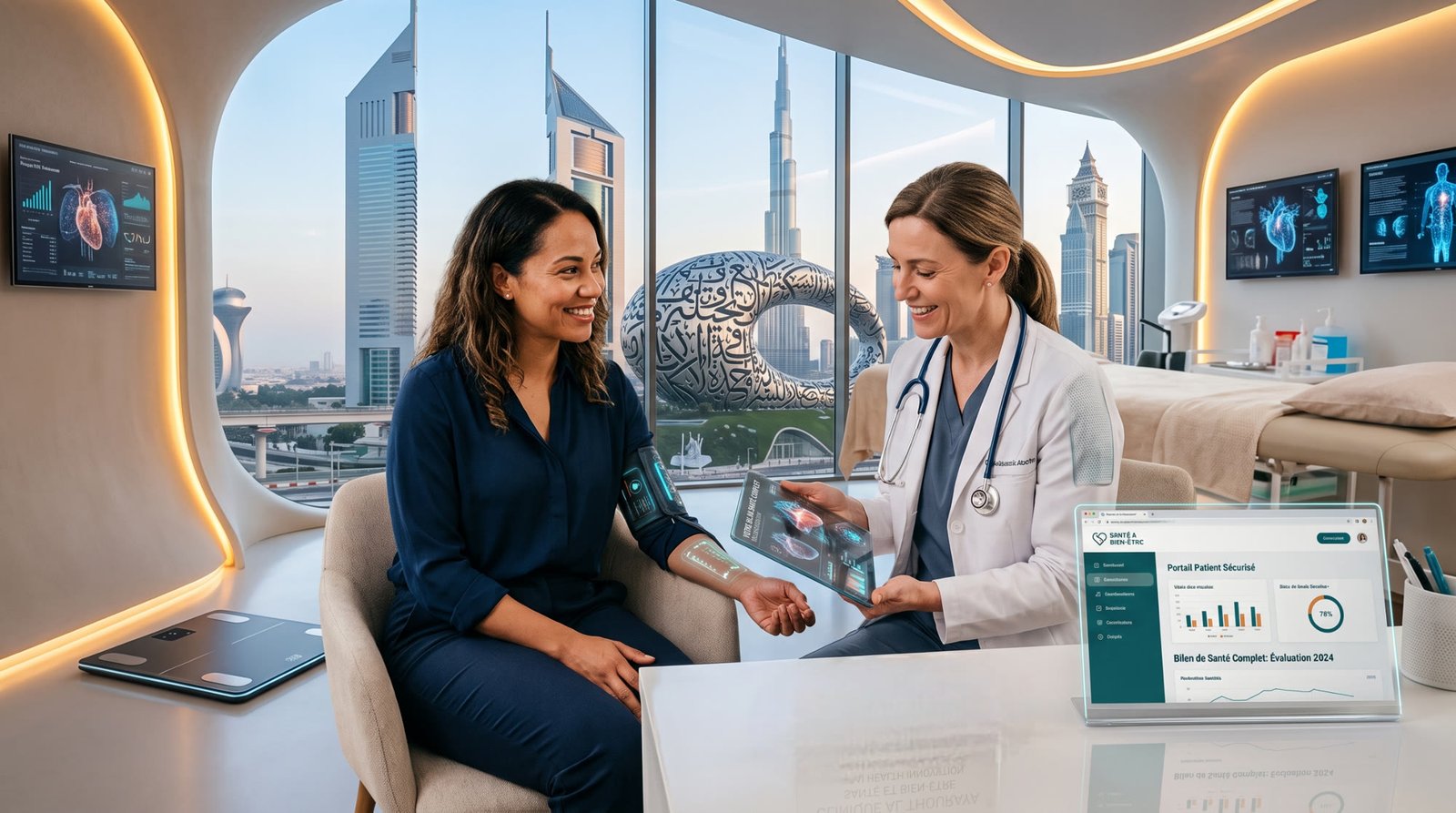
Annual Health Checkup in Dubai: What a GP Actually Checks
Moving to Dubai, or living here for years, often means juggling work, travel and a climate that keeps people indoors half the day. Many internationals only see a doctor when something hurts. An annual health checkup in Dubai is the opposite approach: a planned visit with a GP or family doctor to catch silent risks early and set a clear baseline in the UAE file.
This guide walks through what that visit usually includes, which blood tests earn a place first, and how screening works at Happiness Clinic in Jumeirah / Umm Suqeim 3.
Why an annual checkup matters in Dubai
Dubai’s lifestyle can hide early problems. Long desk hours, air conditioning, low vitamin D despite the sun, travel diets and the gap after changing countries all add up. A yearly review with a family doctor updates your medical baseline after relocation, catches high blood pressure, diabetes risk or abnormal cholesterol before symptoms, and clears the list of medications, vaccines and travel plans. It also decides which tests you actually need, rather than every package advertised online, and when a specialist or hospital work-up would help.
You do not need to feel unwell to book. Prevention is the point.
What a GP usually checks in person
A proper health screening is not a lab menu with a short chat bolted on. The consult starts with history: past illnesses, surgeries, allergies, and family history of heart disease, diabetes or cancer. Lifestyle comes next — sleep, exercise, smoking, alcohol, stress and diet — then the list of current medicines and supplements. Vitals follow: blood pressure, heart rate, weight and BMI trend. The examination is focused on heart, lungs, abdomen and whatever else your age and concerns call for. You leave with a plan: which tests to order, what to repeat next year, and when to come back sooner.
If you already have recent labs from another clinic, bring them. Your GP can often interpret them and skip repeats you do not need.
Blood tests ordered first
Exact panels depend on age, sex, symptoms and risk. For many adults, a first annual checkup in Dubai starts with a complete blood count, fasting glucose and/or HbA1c, a lipid profile, kidney and liver function, TSH when indicated, vitamin D (often relevant in the UAE), and iron studies if fatigue or anaemia risk is part of the story. ECG, imaging, tumour markers and hormone panels are added when they answer a clinical question, not because a package is marketed as “executive.”
At Happiness Clinic the sample is taken on site. A partner laboratory analyses the tubes. The GP who saw you reviews the results with you — no separate referral hop for routine panels.
What to expect by age
In your 20s and 30s the priority is a solid baseline in the UAE: core bloods, blood pressure, lifestyle risks, vaccines and travel health, and a first medical file that follows you. In your 40s the focus tightens on blood pressure, lipids, glucose or HbA1c, weight trend and family history. Chest discomfort, snoring or unexplained fatigue belong in that conversation. From 50 onward the same core panel stays, with closer cardiovascular risk review. Age-appropriate cancer screening is usually coordinated through the right specialist pathway; your GP helps triage, not replace specialty care.
Women’s and men’s health questions — hormones, prostate symptoms, menopause, sexual health — can sit in the same visit when relevant.
How a checkup works at Happiness Clinic
At Happiness Clinic LLC in Jumeirah / Umm Suqeim 3 (Villa 865A, in front of Burj Al Arab), Dr Marc Gabrielli, Consultant in Family Medicine, sees adults and families for annual health reviews.
You book a consult, share history and current concerns, have vitals and a focused examination, then targeted lab requests when needed. Blood is drawn on site; partner-lab results come back for a clear follow-up plan. He has more than 10 years of general practice experience in France and Monaco and has worked as a senior emergency physician. That mix helps separate a routine finding from something that should not wait.
Aesthetic medicine and sexology are available when those topics belong in your care plan. The checkup itself stays grounded in family medicine.
GP checkup versus a hospital “full body” package
Hospital and diagnostic-centre packages can be useful. A GP-led checkup is a different tool. You get continuity with one doctor who knows your file. Tests are chosen for you, not a fixed marketing menu. Results come with next steps, not only a PDF. Follow-up is easier when a value is borderline. If you already bought a package elsewhere, a GP consult can still interpret it and decide what to repeat. For a deeper look at panels, see our guide to blood tests in Dubai. If you are still choosing a regular doctor, start with finding a family doctor in Dubai.
FAQ
How often should I do an annual health checkup in Dubai?
For most healthy adults, once a year is a practical rhythm. Diabetes, hypertension, heart disease or a strong family history often means closer follow-up.
Do I need to fast before blood tests?
Often yes for glucose and a full lipid profile. Water is usually fine. Ask before taking morning medications; the clinic will confirm when you book.
Is an annual checkup covered by insurance in Dubai?
Many plans include some preventive screening, but coverage varies. Confirm with your insurer; the clinic can tell you what paperwork is usually needed.
Can internationals book without a UAE medical history file?
Yes. Bring prior reports, medication lists and vaccination records if you have them. Your first Dubai checkup often becomes the local baseline.
Is this the same as a walk-in for a cold?
No. An annual checkup is planned prevention. Acute issues can still be addressed in a GP visit, but the screening visit is built around baseline review and labs when needed.
Book your annual health checkup in Dubai
If you want a screening chosen for your situation rather than a generic package, book with Dr Marc Gabrielli at Happiness Clinic. Consultation, on-site sampling and a clear results review with your GP.
Call: +971 56 300 0858
Practical details (Dubai)
- Clinic: Happiness Clinic LLC
- Address: Villa 865A, Umm Suqeim 3 / Jumeirah, Dubai (in front of Burj Al Arab)
- Hours: Monday–Saturday, 08:00–20:00
- Phone: +971 56 300 0858
- Website: https://docteurgabrielli.com/
This article is for general information and does not replace a medical consultation. If you have urgent symptoms, seek emergency care.

Finding a Family Doctor in Dubai
Moving to Dubai, or already living here, often means rebuilding healthcare from scratch. A reliable family doctor — your GP — is the person who knows your history, manages day-to-day issues, and guides you when specialist or hospital care is needed. Finding a family doctor in Dubai is less about the nearest walk-in desk and more about continuity you can actually use.
Why a family doctor matters in this city
Dubai has excellent hospitals and specialists. What many internationals still lack is a single doctor who coordinates care. A family physician assesses common illnesses and follow-up, manages chronic conditions such as blood pressure, diabetes and thyroid disease, advises on vaccines, travel health and checkups, and decides when you need labs, imaging, a specialist or the ER. Over years in the UAE that continuity becomes the difference between scattered WhatsApp reports and a coherent medical file.
What to look for as an international patient
Clear English communication matters first. So does transparent availability: can you reach the clinic, book during usable hours, and get a same-day slot when something is stable but pressing? Look for experience with adults and families, and a clinical background that is not only cosmetic marketing. Location and reachable contact details sound boring until you need them on a Thursday evening.
At Happiness Clinic the doctor you meet is a Consultant in Family Medicine — the senior family-medicine licensing level in Dubai — with more than 10 years of general practice in France and Monaco and a background as a senior emergency physician. That mix is useful when you are unsure whether a problem belongs in clinic or hospital.
How a first consult works at Happiness Clinic
At Happiness Clinic LLC in Jumeirah / Umm Suqeim 3 (Villa 865A, in front of Burj Al Arab), Dr Marc Gabrielli sees adults and families for family medicine consultations.
A typical first visit covers the reason you came, medical history, current medications and allergies, a focused examination, and a clear plan: treatment, tests if needed, and follow-up. When blood work is useful, the sample is taken on site and analysed by a partner laboratory; the same GP who saw you reviews the results. Home visits are available in the Jumeirah and Burj Al Arab area when clinically appropriate for stable patients.
The emergency background helps separate urgent from non-urgent problems — useful in a city where many people default to hospital care for everything. For a fuller decision guide, see GP or ER in Dubai.
Clinic care versus the ER
See a family doctor for infections, fever that is not severe, skin issues, digestive problems, mild injuries, medication reviews, hypertension follow-up, annual checkups, and those “something feels off” assessments that need a calm look. Go to the ER — or call 998 for an ambulance — for chest pain, severe shortness of breath, stroke signs, major trauma, uncontrolled bleeding, sudden severe neurological symptoms, or any life-threatening situation. When unsure during clinic hours, a GP consult can triage safely. Outside hours, or when red flags are present, use emergency services rather than waiting.
Who this care is for
Internationals living or staying in Dubai who want a medical home base: executives, families, long-stay residents, and visitors who prefer continuity over one-off walk-ins. Happiness Clinic also offers aesthetic medicine and sexology when relevant; family medicine remains the foundation. Prevention visits often fold into an annual health checkup in Dubai, and panels are explained in our guide to blood tests in Dubai.
FAQ
Do I need a referral to see a family doctor in Dubai?
Usually no for a private GP consult. Bring prior reports or medication lists if you have them.
Can I book if I am not French?
Yes. Care is for international patients; consultations are in English.
What should I bring to the first appointment?
Emirates ID or passport, insurance details if applicable, a medication list, and any recent lab or imaging results.
Is this the same as a walk-in clinic?
Family medicine focuses on continuity and a structured plan, not only a one-time symptomatic visit. Acute problems are still handled; the difference is the file that follows you.
Do you offer home visits?
Yes, in the Jumeirah and Burj Al Arab area when appropriate for stable patients. Home visits are not a substitute for ambulance or ER care when red-flag symptoms are present.
Book a family doctor in Dubai
If you want a regular GP rather than another one-off walk-in, book with Dr Marc Gabrielli at Happiness Clinic.
Call: +971 56 300 0858
Practical details (Dubai)
- Clinic: Happiness Clinic LLC
- Address: Villa 865A, Umm Suqeim 3 / Jumeirah, Dubai (in front of Burj Al Arab)
- Hours: Monday–Saturday, 08:00–20:00
- Phone: +971 56 300 0858
- Website: https://docteurgabrielli.com/
This article is for general information and does not replace a medical consultation. If you have urgent or life-threatening symptoms, call 998 or seek emergency care.

How Ozempic, Mounjaro, Saxenda, Wegovy and Trulicity work
Patients in Dubai ask about Ozempic, Mounjaro, Saxenda, Wegovy and Trulicity almost every week. These medicines can help some people with type 2 diabetes and, in specific formulations, with weight management. They are not interchangeable. The right choice depends on diagnosis, medical history and local prescribing rules — not on what is trending on social media.
How these medicines work
GLP-1 is a hormone released by the intestine after eating. Ozempic, Wegovy, Trulicity and Saxenda act on the GLP-1 receptor. Mounjaro (tirzepatide) acts on both the GIP and GLP-1 receptors. Together those signals can increase insulin release when blood glucose is high, reduce glucagon when it is not needed, slow gastric emptying so food leaves the stomach more gradually, and influence appetite pathways in the brain. The effect is gradual and varies from person to person. Doses are normally increased step by step to improve tolerance. These medicines should never be started, stopped or adjusted without medical advice.
Type 2 diabetes versus weight management
These medicines belong only where the clinical indication fits, as part of a broader plan that may include nutrition, activity and other treatments.
For type 2 diabetes, Ozempic (semaglutide), Trulicity (dulaglutide) and Mounjaro (tirzepatide) may be prescribed for blood-glucose management according to the product label and the patient’s needs. For weight management, Saxenda (liraglutide) and Wegovy (semaglutide) are formulations authorised specifically for eligible adults in many markets; Mounjaro may also have an obesity or overweight indication in some countries.
Brand names, approved indications, availability and prescribing requirements differ between countries, including the UAE. A medicine approved for diabetes is not automatically appropriate for weight management, and a weight-management medicine is not a replacement for diabetes care. Eligibility has to be assessed by a doctor under local rules.
Off-label or diverted use
Some people seek Ozempic or another diabetes medicine solely for weight loss without a proper assessment. Using a medicine outside its approved indication can sometimes be medically justified by a doctor; it should never be self-directed. Unsupervised or diverted use can mean the wrong medicine or dose, significant dehydration, interactions, delayed diagnosis of another condition, and difficulty managing diabetes safely. It can also contribute to shortages for patients who rely on these medicines for diabetes. Products bought through unverified websites or social media may be counterfeit or improperly stored.
Side effects and warning signs
The most common effects are digestive and often more noticeable when the dose is increased: nausea, vomiting or diarrhoea; constipation, bloating or abdominal discomfort; reduced appetite, reflux or indigestion; and low blood glucose, particularly when combined with insulin or certain other diabetes medicines.
Less common but important problems include gallbladder disease, pancreatitis, dehydration with kidney injury, or a serious allergic reaction. Thyroid C-cell tumour warnings and contraindications — including a personal or family history of medullary thyroid carcinoma or MEN2 — must be checked against the local product information.
Seek urgent medical help for severe or persistent abdominal pain, repeated vomiting, jaundice, breathing difficulty, facial swelling, or symptoms of severe hypoglycaemia.
Assessment and follow-up at Happiness Clinic
At Happiness Clinic LLC in Jumeirah / Umm Suqeim 3 (Villa 865A, in front of Burj Al Arab), Dr Marc Gabrielli, Consultant in Family Medicine, starts by clarifying the treatment goal and reviewing symptoms, weight and metabolic health. History, current medicines, previous treatments, pregnancy plans where relevant, contraindications and warning signs come next. If treatment is appropriate under Dubai and UAE rules, he explains expected benefits and limits, chooses a suitable option, sets a cautious titration plan and arranges follow-up.
Blood work before and during treatment keeps the course safer. Sampling is done on site at the clinic; a partner laboratory analyses the tubes; results are reviewed with the same GP. Typical checks include blood sugar and HbA1c, kidney and liver function, lipids and, depending on the case, selected other markers. He has more than 10 years of general practice experience in France and Monaco and has worked as a senior emergency physician — useful when side effects or red flags need a clear decision about escalation.
Choosing among these options
Ozempic, Mounjaro, Saxenda, Wegovy and Trulicity work through related but not identical pathways. They can be valuable for carefully selected patients. There is no single best option for everyone. Safe use depends on an accurate indication, individual assessment and medical supervision — not on a shared prescription or an online seller.
This article is for general information only. It is not personal medical advice. Do not start, stop or change a prescription based on what you read here. If you have severe or rapidly worsening symptoms, seek urgent medical care.
FAQ
Are Ozempic and Mounjaro the same medicine?
No. They are different medicines with different receptor targets. A doctor should decide which option, if any, is appropriate.
Can GLP-1 medicines be used for weight loss?
Some formulations are approved for medical weight management in specific situations. Eligibility and follow-up require a clinical assessment under local rules.
Do I need blood tests before starting?
Usually yes. Baseline and follow-up blood work help confirm suitability and monitor safety. At Happiness Clinic the sample is taken on site and reviewed with your GP.
How can I arrange a consultation in Dubai?
Call Happiness Clinic on +971 56 300 0858. Open Monday–Saturday, 08:00–20:00, Villa 865A, Umm Suqeim 3 / Jumeirah, in front of Burj Al Arab.
Book a GLP-1 consultation in Dubai
If you want a grounded assessment of whether one of these medicines fits your situation, book with Dr Marc Gabrielli at Happiness Clinic.
Call: +971 56 300 0858
Practical details (Dubai)
- Clinic: Happiness Clinic LLC
- Address: Villa 865A, Umm Suqeim 3 / Jumeirah, Dubai (in front of Burj Al Arab)
- Hours: Monday–Saturday, 08:00–20:00
- Phone: +971 56 300 0858
- Website: https://docteurgabrielli.com/

Dengue Fever in Dubai: Symptoms, Treatment and When to See a GP
Dengue fever is a viral infection transmitted mainly by infected Aedes mosquitoes, including Aedes aegypti and Aedes albopictus. It occurs in many tropical and subtropical regions and can affect residents and travellers linked to Dubai — after trips abroad, or when local conditions allow transmission. Most cases are manageable with careful monitoring; a minority become severe and need hospital care fast.
What causes dengue
The dengue virus belongs to the Flavivirus group. There are four closely related serotypes. Infection with one serotype generally protects against that serotype, but not reliably against the others. A second infection with a different serotype can carry a higher risk of severe disease. That is why a “mild” first episode is not a free pass forever.
Symptoms and warning signs
Symptoms usually begin four to ten days after the bite of an infected mosquito. Dengue may stay mild, or it may progress to severe dengue (sometimes still called dengue haemorrhagic fever). Common features include sudden high fever, severe headache, pain behind the eyes, marked muscle or joint pain, nausea or vomiting, a skin rash, fatigue and loss of appetite.
Most people recover with supportive care. Seek urgent medical attention for severe abdominal pain, persistent vomiting, bleeding from the nose or gums, blood in vomit or stool, unusual drowsiness or restlessness, breathing difficulty, or worsening symptoms as the fever settles. Those can be warning signs of severe dengue.
How dengue is treated
There is no specific antiviral treatment. Rest, careful hydration and medical monitoring are the mainstays. Paracetamol (acetaminophen) can help with fever and pain when taken as directed. Avoid aspirin, ibuprofen and other non-steroidal anti-inflammatory drugs because they can increase bleeding risk. Do not self-medicate if you may have dengue; a doctor can advise on testing, fluids and follow-up.
Vaccines: Dengvaxia and Qdenga
Vaccine recommendations depend on age, previous infection, local licensing and individual risk. Dengvaxia is restricted in many settings to people with documented previous dengue infection because of safety considerations in those who have never had dengue. Qdenga (TAK-003) has different indications and may be used in some countries regardless of previous infection. Availability and eligibility change, so discuss vaccination with a travel clinic or your GP rather than assuming a product you read about abroad is available or suitable here.
Preventing mosquito bites
Aedes mosquitoes are active mainly during daylight. An approved repellent, long sleeves and trousers, screens or air conditioning, and a mosquito net when sleeping in exposed settings all help. Standing water in containers around the home is a breeding site — empty it. Prevention is dull. It still works better than treating severe disease later.
Seeing a GP in Dubai for suspected dengue
Contact a GP promptly if you develop a high fever with severe aches, rash, vomiting or unusual bleeding after possible mosquito exposure or travel. At Happiness Clinic LLC in Jumeirah / Umm Suqeim 3 (Villa 865A, in front of Burj Al Arab), Dr Marc Gabrielli, Consultant in Family Medicine, can assess symptoms, arrange appropriate blood tests when useful, and monitor you during the window when complications can appear. Samples are taken on site; a partner laboratory analyses them; results are reviewed with the same GP. He has more than 10 years of general practice experience in France and Monaco and has worked as a senior emergency physician — useful when the question is clinic follow-up versus hospital escalation.
Go to an emergency department — or call 998 — for any warning sign of severe dengue or rapid deterioration. For further background, see the World Health Organization dengue fact sheet.
FAQ
Can dengue be treated at home?
Mild dengue may be managed with rest, fluids and medical advice, but follow-up matters because warning signs can appear as the fever improves. Avoid aspirin and ibuprofen unless a clinician advises otherwise.
When should an international visitor seek urgent care?
Seek urgent care for persistent vomiting, severe abdominal pain, bleeding, breathing difficulty, confusion, unusual sleepiness or rapid deterioration. Call emergency services or go to an emergency department for severe symptoms.
Can I consult in English in Dubai?
Yes. Consultations at Happiness Clinic are in English for international patients, subject to appointment availability.
Book an assessment in Dubai
If you have fever after travel or mosquito exposure and need a clear plan, call Happiness Clinic during opening hours. If red flags are present, go to the ER first.
Call: +971 56 300 0858
Practical details (Dubai)
- Clinic: Happiness Clinic LLC
- Address: Villa 865A, Umm Suqeim 3 / Jumeirah, Dubai (in front of Burj Al Arab)
- Hours: Monday–Saturday, 08:00–20:00
- Phone: +971 56 300 0858
- Website: https://docteurgabrielli.com/
This article is for general information and does not replace a medical consultation. If you have urgent symptoms, seek emergency care.

High blood pressure (hypertension): how to detect and manage it
High blood pressure, also called hypertension, is common and often goes unnoticed. It can quietly damage the heart, brain, kidneys and blood vessels, so regular checks matter even when you feel well. In Dubai, where many internationals arrive without a recent medical file, a blood pressure reading in a GP consult is frequently the first solid baseline they have had in years.
What high blood pressure means
Blood pressure is the force of blood against artery walls. Hypertension means readings remain consistently above the healthy range. It earns the “silent” label because many people have no symptoms, yet untreated high pressure raises the risk of heart attack, stroke, heart failure, kidney disease and vision problems. Headache, dizziness, nosebleeds or blurred vision are not reliable ways to detect it. Do not wait for symptoms before being checked.
Risk factors that show up often
Risk increases with age and family history. Excess weight, a high-salt or highly processed diet, too little physical activity, smoking, excess alcohol, poor sleep and long-term stress all contribute. Diabetes, kidney disease and some medicines can push numbers up as well. None of that makes a diagnosis by itself; repeated, correctly taken readings do.
Prevention and day-to-day management
Small, consistent changes lower pressure and protect long-term health. A pattern built around vegetables, fruit, pulses, whole grains and lean proteins, with less salt and fewer ultra-processed foods, is a practical starting point. Aim for at least 150 minutes of physical activity a week when your health allows. Reach and maintain a healthy weight, stop smoking, and keep alcohol within recommended limits. Sleep and workable stress habits matter more than people admit in a busy city.
If your GP advises home monitoring, use a validated upper-arm cuff and correct technique: seated, back supported, feet on the floor, arm at heart level, after a few quiet minutes. Bring the log to the next visit. Phone-app guesses and wrist gadgets without validation waste everyone’s time.
When medicines are needed
Lifestyle measures matter, but some people need medication from the outset or when readings stay high. A GP may prescribe one or more medicines based on your readings, age, kidney function, diabetes, cardiovascular risk and other conditions. Take treatment consistently. Do not stop it without medical advice. Regular follow-up adjusts the dose and checks for side effects.
Related blood work — kidney function, electrolytes, glucose, lipids — often sits alongside blood pressure care. At Happiness Clinic those samples can be taken on site and analysed by a partner laboratory, then reviewed with the same doctor who manages your pressure.
Screening timing and emergency thresholds
Because hypertension can be silent, adults should have their blood pressure checked regularly. Screening is especially important from age 40, or earlier with family history, diabetes, kidney disease, excess weight or another risk factor. An abnormal reading needs confirmation and a plan, not a shrug. It often fits naturally into an annual health checkup in Dubai.
Seek urgent help for a reading around 180/120 mmHg or higher with chest pain, severe headache, breathlessness, weakness, confusion or vision changes. That combination is not a “wait for Monday” problem — call 998 or go to the ER.
Blood pressure care at Happiness Clinic
At Happiness Clinic LLC in Jumeirah / Umm Suqeim 3 (Villa 865A, in front of Burj Al Arab), Dr Marc Gabrielli, Consultant in Family Medicine, provides blood pressure screening and follow-up for residents and international patients. English consultations cover readings, cardiovascular risk and treatment needs. He has more than 10 years of general practice experience in France and Monaco and has worked as a senior emergency physician — useful when a high reading needs calm triage rather than panic or false reassurance.
This article is for general information and education only. It is not personal medical advice or a diagnosis. For further background, see the World Health Organization information on hypertension.
FAQ
How often should I have my blood pressure checked?
Adults should have regular checks even when they feel well. Your GP will set the interval from your age, readings and risk factors.
When is high blood pressure an emergency?
Seek urgent care for a reading around 180/120 mmHg or higher with chest pain, severe headache, breathlessness, weakness, confusion or vision changes.
Can international patients consult in English in Dubai?
Yes. Consultations at Happiness Clinic are in English for international patients, subject to appointment availability.
Can I get related blood tests at the same visit?
Often yes. When kidney function, glucose, lipids or other markers are useful, the sample can be taken on site and reviewed with your GP after partner-lab analysis.
Book a blood pressure check in Dubai
If you need screening, confirmation of high readings, or steady follow-up, book with Dr Marc Gabrielli at Happiness Clinic.
Call: +971 56 300 0858
Practical details (Dubai)
- Clinic: Happiness Clinic LLC
- Address: Villa 865A, Umm Suqeim 3 / Jumeirah, Dubai (in front of Burj Al Arab)
- Hours: Monday–Saturday, 08:00–20:00
- Phone: +971 56 300 0858
- Website: https://docteurgabrielli.com/